Our Story

What is now the Historic Holy Cross Neighborhood, originated as plantations in the early 1800s, with sugar as the main crop. The Holy Cross area, part of the Lower Ninth Ward, represents the furthermost eastward expansion of the City of New Orleans, along the Mississippi River. In 1849 the Brothers, Priests and Sisters of Holy Cross established an orphanage on land that was the Reynes Plantation. In 1879 they established a school to serve the growing diverse population. This population consisted of a mix of immigrant groups, native-born Americans, and included free people of color. This wide group of Germans, Italians, Irish and African-Americans established benevolent associations and mutual-aid societies to assist the many families who were struggling.​

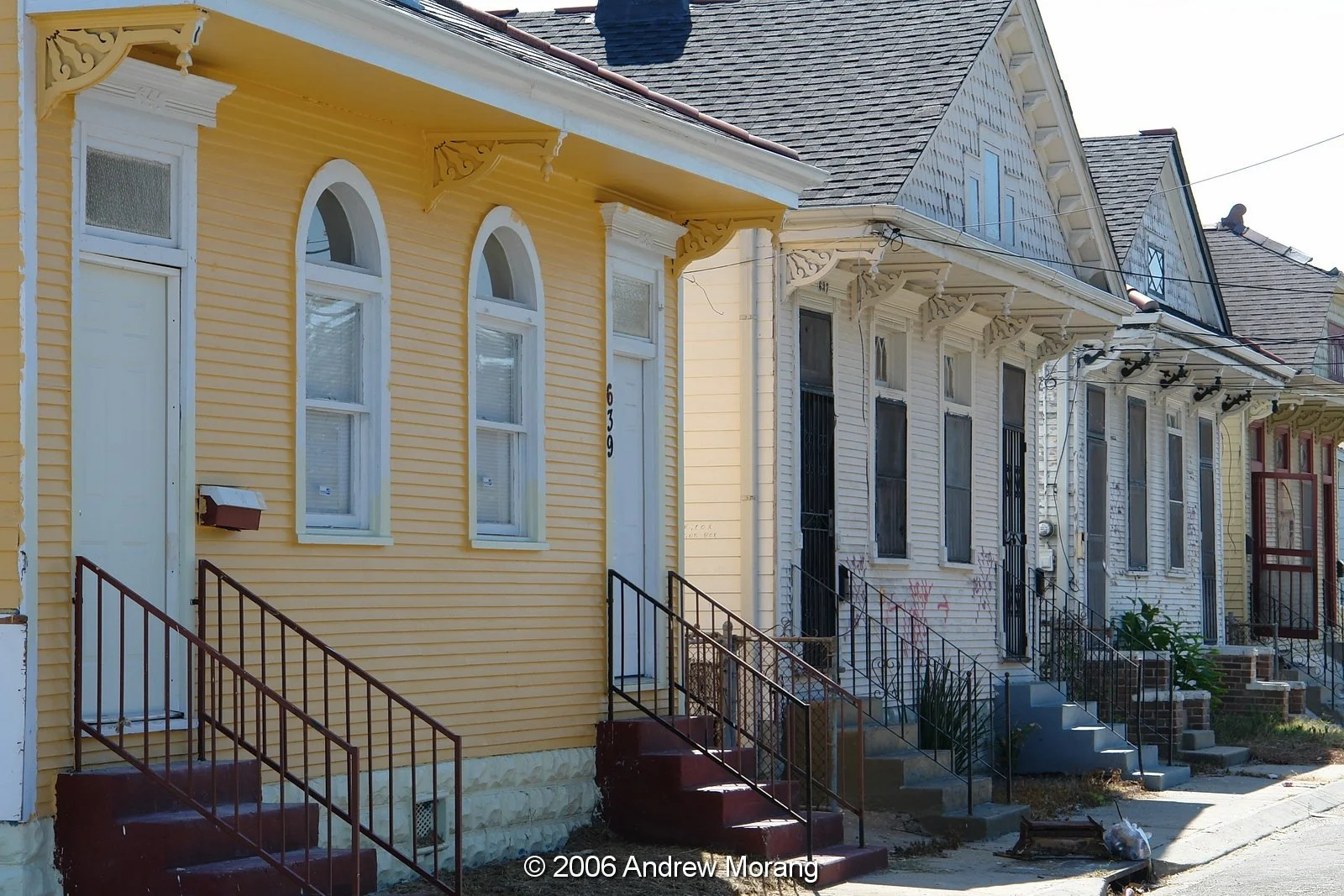
This wide diversity contributed to the different styles of architecture of the homes built along the river. Along with the traditional shotgun houses found here, there are beautiful Creole Cottages, bungalows and the two-story Victorian and Queen Anne houses, including the two iconic Steamboat Houses. The Doullut houses, as they are also called, were built to resemble high style steamboats and were among the first Landmarks designated by the Historic District Landmarks Commission and placed on the National Register of Historic Buildings. These ornate Victorian Wooden Houses at the levee were designed by Paul Doullut to remind him of the ships that he and his wife captained. He built the one by the levee in 1905 and the one across the street in 1913 for his son. These traditional style houses helped to create a “Porch” community, with neighbors knowing neighbors. Today, it is still a common occurrence to see neighbors enjoy a visit on the porch with each other. In 1834 the Jackson Barracks were built to provide headquarters for the Louisiana National Guard.​

The parcels created in Holy Cross were larger parcels than those found in the Marigny and Bywater. This resulted in many small farms in the area and these farms continued producing and selling their produce through the 1940’s. This Truck gardening was a source of employment for many in the area, and products were sold to the restaurants in the French Quarter and at the French Market. 

From the late part of the 19th Century through the early part of the 20th century, the population grew quickly. The residents opened shops, churches and small businesses throughout the area.​

Along with Holy Cross School, the original Ursuline School, the oldest Catholic School in the nation, was established here in Holy Cross. In 1895 the Holy Cross school was built by James Gallier, Sr. and the wings added by his son. In 1912 the levee along the river was built in its present form, and in 1923, the Industrial Canal was finished to provide passage from the Mississippi to Lake Pontchartrain. This separated the Lower Ninth Ward along with St. Bernard from easy access back and forth to the rest of the city. As a result of the construction of the Industrial Canal, Ursuline School, along with many residential homes, were destroyed.​

African-American working class homeowners pre-dominated prior to Hurricane Katrina, which led to a mixed income and more racially diverse area that included many artists and musicians. To this day the music and traditions of New Orleans are passed down in this neighborhood. Fats Domino, one of the most famous musicians from this area, remained here all his life until he was forced to move after Katrina. His Second Line parade, done in honor of his death, proceeded down St. Claude Avenue to his home and was attended by thousands. Professional trumpeter and U.S. Cultural Ambassador Shamarr Allen, often returns to his childhood neighborhood every week to provide free music lessons to the kids.

The area continued to thrive with a large mixed community until Hurricane Betsy. The first levee failure of Hurricane Betsy in 1965 decimated the area. Holy Cross rebounded and continued to thrive and maintain the amazing cultural diversity it is known for. Proud of our New Orleans culture, Holy Cross has been home to artists, Mardi Gras Indians and well known musicians such as George “Kid Shiek” Colar of the Olympia Brass Band and Freddie Lonzo of the Preservation Hall Jazz Band and the Deslondes. 

The Lower Ninth Ward was also ground zero in the fight for civil rights.

On November 14, 1960, while Ruby Bridges attended William Frantz Elementary, Leona Tate, Tessie Prevost and Gail Etienne attended McDonogh 19 Elementary on St. Claude Avenue in the Lower Ninth Ward. As the day progressed at McDonogh, white parents removed their children from the school, leaving Leona, Tessie and Gail as the only students in the building. 

Through her Leona Tate Foundation for Change, Tate, with the help of city and school board officials, purchased the since-abandoned McDonogh 19 building. Named the Tate Etienne and Prevost Interpretive Center (TEP Center), the mixed-use facility hosts education and exhibition space dedicated to the history of New Orleans public school desegregation, civil rights, and restorative justice. The space also includes 25 affordable residential units for individuals age 55 and older.

Holy Cross Area was listed on the National Register in 1986 and was named a local Historic District in 1990.​

In 1996 after 18 months of planning the Delery Street Playground was built with the assistance of  300 volunteers and the help of Neighborhood Volunteer Captains. Many children still enjoy this playground today. Prior to Katrina, the Delery Street playground soccer team existed with over 70 children from the ages of 5 to 13 participated in the program.  ​

In 2005, Hurricane Katrina devastated the Lower Ninth Ward Area, and while remaining resilient, the neighborhood is still struggling to recover. The loss of life which occurred was tragic for the area, as well as the multi-generational families who lived in the community. Unfortunately our namesake, Holy Cross, was not rebuilt. Historical homes, many of them built around 1860 are close to being lost forever. 

New threats to our autonomy and existence are looming on the horizon. One such threat is proposed widening of the Industrial Canal, which would expose our neighborhood to potentially 20 years of industrial construction and increase the danger of flooding to the Lower Ninth Ward, as well the entire city. One component of this project, the removal of the Historic St. Claude Bridge, which is one of the last remaining single Bascule Strauss Trunnion Bridges in the United States, would be a significant loss to the community.​

The second threat to our existence and livelihood is the proposed Alabo Street Wharf and Grain Terminal project, affectionately referred to as "The Grain Train." This project aims to place a harmful soybean grain terminal and soybean oil deodorizing tower in the middle of our residential neighborhood as well as the running trains through the neighborhood, merely feet away from the front doors in parts of our neighborhood. 

In both instances, these projects have brought the community together to organize, resist and protect the community the beloved to so many. ​

Even with these losses and heartbreaks, Holy Cross is recovering. Families are returning and new residents are discovering Holy Cross as an affordable city neighborhood with a feel of a village community. While strolling along the levee with the stunning views of the city, you can follow your eyes from Crescent Park, past the spires of St. Louis Cathedral to the tall buildings of the CBD, see the Superdome in the background, and then over the Mississippi River Bridge to Algiers, giving you the ability to see and feel the history of the city. With its spacious yards, historic character, cultural diversity and proximity to the city, Holy Cross is an amazing community on its march back to realizing its full potential again.